Review the page below, then tell Claude what to change
About the Practice

Advisory built on honesty, not optimism.

The work here starts with listening. It ends with a rolled out practiced plan that increases the overall value of your business, from beginning to end.

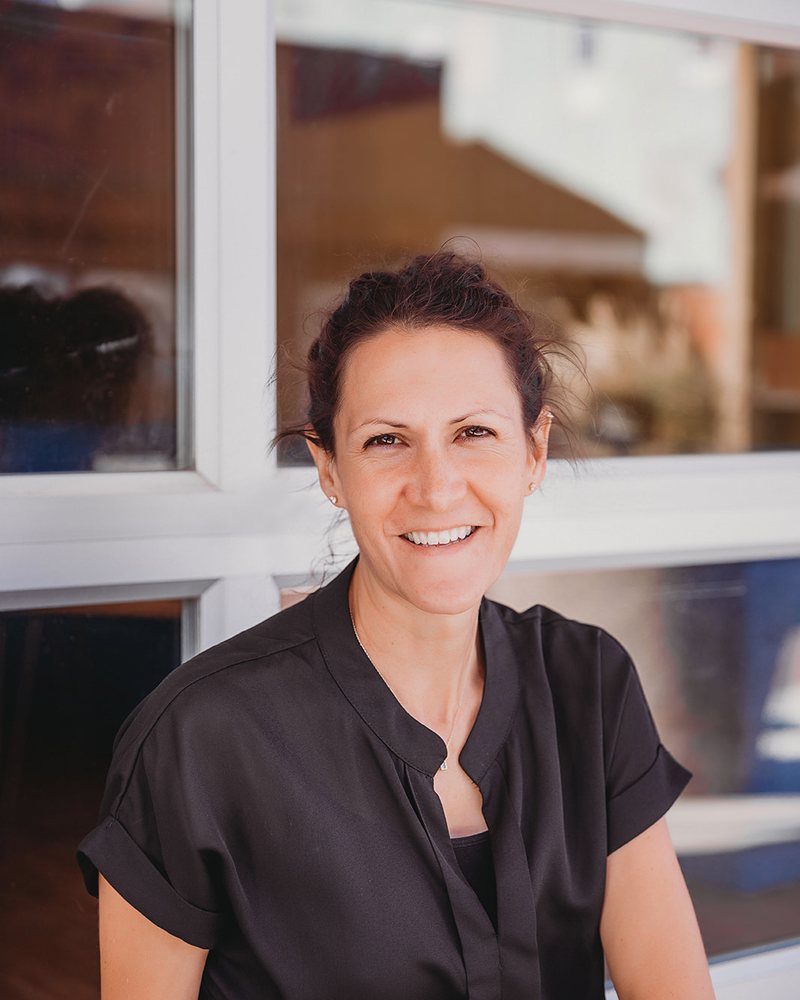
Kim Lauffer — Practiced Path Advisory

Kim Lauffer · Practiced Path Advisory · Afton, Iowa

Based in Afton, Iowa
Works with $75K – $2M revenue businesses Does this include me? →
Format In-person & virtual
Approach One advisor, sustained
Kim Lauffer

Someone who actually knows what this is like.

Kim Lauffer has spent years working alongside small business owners — not as an outside consultant arriving with a framework to sell, but as someone who understands the weight of building something real in a real community.

This is not consulting in the traditional sense. It's a working advisory relationship with someone who has actually done what she's asking you to do — and who will tell you the truth even when it's harder to hear.

"Most advisory relationships fail not because the strategy was wrong, but because the person closest to the owner never bought in — or because the owner never got honest about what they actually wanted."

Practiced Path Advisory serves small business owners who are doing real work and want a real partnership. Not a framework. Not a course. One advisor who knows your business and shows up consistently.

How Kim works.

Every engagement starts the same way: Kim listens. Not to diagnose, not to position a service, but to understand. Most owners have been circling the same problem for months without being able to name it clearly. The act of being listened to by someone who knows what to look for often breaks that cycle in the first conversation.

Kim's work is direct. She names what she sees. She pushes back when something doesn't add up. She will tell you when a service isn't the right fit — and refer you to someone else when she's not the best person for the problem.

She doesn't believe in plans that become homework. The work that happens in sessions with Kim is built together — side by side, not assigned and abandoned. That's how things actually get done.

The Referral Circle

Every client who completes any paid service is invited into the Referral Circle. When you refer someone who becomes a client, you receive a $150 credit toward any future service. In a small-community practice, referrals aren't a tactic — they're how trust compounds over time.

Start a Conversation
How We Work

What you can expect.

Honesty before encouragement.

You'll get the honest read before you get the optimistic one. That's not pessimism — it's respect. You deserve to work from the real picture.

No service that isn't a fit.

If a service isn't the right next step for you, Kim will say so. No upselling. No pressure. Just a clear recommendation — even if that's somewhere else.

Work done together.

Nothing assigned as homework. The things built in sessions are built in the session — together, with you narrating and Kim structuring.

The full person, not just the business.

You are not separate from the business you run. Work that ignores the owner's life, energy, and goals is incomplete work. We address both.

Community-rooted, Iowa-grounded.

This practice was built in Afton, Iowa. It understands what it means to run a business where you live — the visibility, the relationships, the specific weight of that.

One voice, sustained.

You work with Kim. Not a team that rotates. Not a junior advisor. The same person who heard your first conversation is the one who's there two years later.

Start with a free 30-minute conversation.

No pitch. No agenda beyond understanding your situation. If it's not a fit, she'll say so.

Schedule the First Conversation

Who Practiced Path Advisory works with.

And why the range is exactly what it is.

$75K to $2M in annual revenue.

That range isn't arbitrary. It's where advisory work like this produces the most meaningful return. Below $75K, a business is often still finding its footing in ways that require a different kind of support. Above $2M, the complexity typically calls for a larger team of specialists — attorneys, M&A advisors, investment bankers.

In between? That's Main Street. And that's where most business owners in Iowa are building something real — without access to the kind of honest, consistent advisory that businesses three times their size take for granted. That gap is exactly what this practice was built to close.

80% of a business owner's net worth is tied up in their business — with no plan for what comes next
60% of owners who sell have no personal plan for what their life looks like afterward
"Your business is probably your biggest financial asset. It deserves to be treated like one — whatever you eventually decide to do with it."

Starting out — or not yet at $75K? You still belong here.

The best time to build a business correctly is before the bad habits are baked in. Most businesses that struggle at $300K are still running the same way they did at $30K — because nobody helped them build a foundation designed to grow.

If you're in the first two or three years, or still working toward consistent revenue, the most valuable thing you can do is build with the end in mind. That means designing your offers, your pricing, your processes, and your client relationships to support a business that works — not just one that keeps you busy. Whether your end goal is a sale, a transition, stepping back, or simply running something that doesn't consume your entire life, the structure you build right now is what makes that possible later.

The First Conversation is free. You don't need to have it all figured out to show up for it.

76% of business owners report regretting how they exited — most because they never planned for it
70% of owners are now aware of exit planning options — up from just 34% a decade ago
"The business you're building right now is either becoming an asset or becoming a job. The difference is almost entirely in how you structure it from the beginning."

If you ever want to sell, step back, or hand it off — the work starts now.

Most Main Street business owners wait too long to think about their exit. The data is consistent and sobering: the majority of owners who want to transition their business can't — because the business can't run without them, there's no documentation, the client relationships live in their head, and there's no plan that a buyer or successor could step into.

The Legacy Blueprint is designed for exactly this moment — 3 to 5 years before you want to exit, while there's still time to increase what the business is worth. At $150K in annual revenue, the difference between a business worth 1.5x annual profit and one worth 3x is more than $100,000. That gap is almost entirely about how the business is documented, systematized, and structured to run without you.

You don't have to be ready to sell to start. You just have to be honest about the fact that eventually, every owner leaves — and the question is whether you leave on your terms or the business's.

"Every owner exits eventually. The only question is whether the exit is planned — or forced."

Built for the smaller end of small business. Useful everywhere.

Running a smaller business is different from running a larger one — even when both get called "small." The customer base is more personal. The owner carries more of the weight directly. The margin for error is thinner. The question of whether to grow, hold, or eventually sell is shaped by factors that practices built for $2M+ businesses have never had to think about.

Practiced Path Advisory works in person when that's useful, and virtually when it isn't. It understands what it means to make a significant business decision when the stakes are personal — not just financial — and when the business and the life around it are inseparable. That's true whether you're in a small town or a mid-size city. The size of the business is what matters here, not the zip code.

Start with a free conversation.

No pitch. No agenda. Just an honest look at where you are and whether this is the right fit.

Schedule the First Conversation